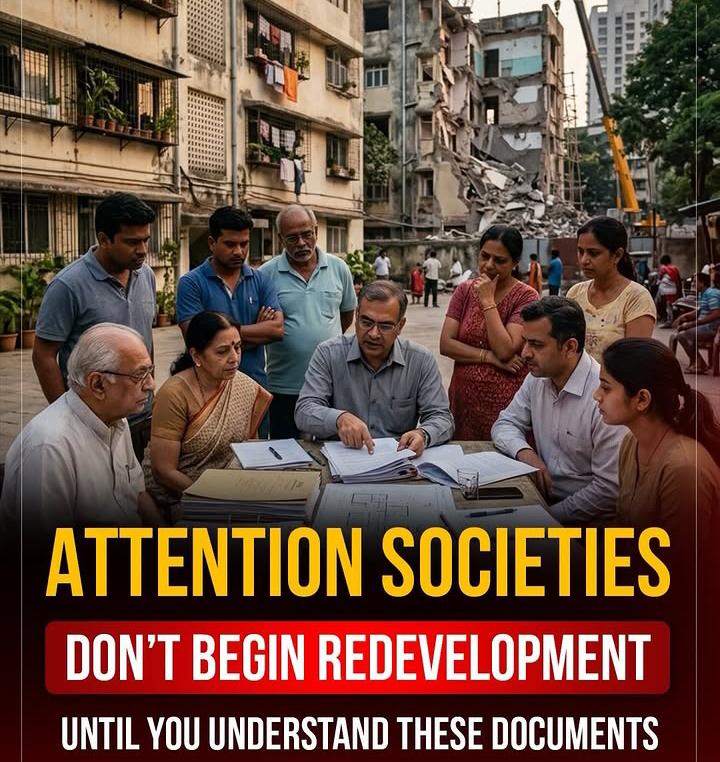
ATTENTION SOCIETIES - Don't Begin Redevelopment Until You Understand These Documents
Understanding Developer Agreements and PAAA in Housing Redevelopment
Redevelopment projects can transform old housing societies into modern, safer, and more valuable living spaces. However, before any redevelopment begins, it is important for society members and developers to establish clear legal agreements that protect everyone’s interests. Two of the most important documents in this process are the Developer Agreement (DA) and the Permanent Alternate Accommodation Agreement (PAAA).
Here’s a simple breakdown of what they mean and why they matter.
What is a Developer Agreement (DA)?
A Developer Agreement is a legally binding contract signed between the housing society and the developer. It outlines the complete terms and conditions of the redevelopment project.
This agreement generally includes:
Project scope and redevelopment plans
Responsibilities and obligations of the developer
Construction timelines and project milestones
Financial arrangements and compensation details
Rights and responsibilities of the society and members
Legal approvals and compliance requirements
Penalty clauses for delays or non-performance
In simple terms, the Developer Agreement acts as the foundation of the entire redevelopment project.
Why is a Developer Agreement Needed?
A well-drafted Developer Agreement is essential because it provides clarity, accountability, and legal protection throughout the redevelopment process.
1. Defines Responsibilities Clearly
The agreement specifies the developer’s duties, project deliverables, amenities promised, and execution standards. This reduces confusion and misunderstandings later.
2. Establishes Timelines and Penalties
It clearly mentions construction schedules, completion timelines, and penalties for delays. This ensures the project stays on track.
3. Protects Society’s Financial and Legal Interests
The agreement safeguards the rights of society members and protects them from unfair terms or financial risks.
4. Prevents Disputes
By documenting all terms in writing, the agreement minimizes conflicts between the society and the developer during redevelopment.
5. Ensures Accountability
Both parties remain legally accountable for fulfilling their commitments.
What is PAAA?
PAAA (Permanent Alternate Accommodation Agreement) is an individual legally binding agreement signed between each society member and the developer.
This agreement guarantees the member’s right to receive a redeveloped flat and clearly defines the terms related to:
Permanent alternate accommodation
Flat specifications and carpet area
Temporary accommodation or rent compensation
Possession timelines
Additional compensation or benefits
Unlike the Developer Agreement, which is signed with the society as a whole, PAAA is executed individually with each member.
Importance of PAAA in Redevelopment
The PAAA is extremely important because it directly protects the rights of individual flat owners.
Key Benefits of PAAA
Provides legal assurance of the new redeveloped flat
Clearly defines compensation and rent arrangements
Ensures transparency in possession timelines
Protects members from future disputes
Gives members documented legal security
Difference Between Developer Agreement and PAAA
| Developer Agreement (DA) | PAAA |
|---|---|
| Signed between society and developer | Signed between individual member and developer |
| Covers overall redevelopment project | Covers individual member rights |
| Defines project scope and obligations | Defines flat allocation and compensation |
| Applies to the entire society | Applies to each member separately |
Final Thoughts
Redevelopment can bring significant benefits to housing societies, but it also involves major financial and legal commitments. Proper documentation is critical for ensuring transparency and protecting everyone involved.
A strong Developer Agreement creates the framework for successful redevelopment, while a well-structured PAAA safeguards the rights of individual members.
Before signing any redevelopment documents, societies and members should always consult experienced legal and redevelopment professionals to fully understand the terms and avoid future complications.